

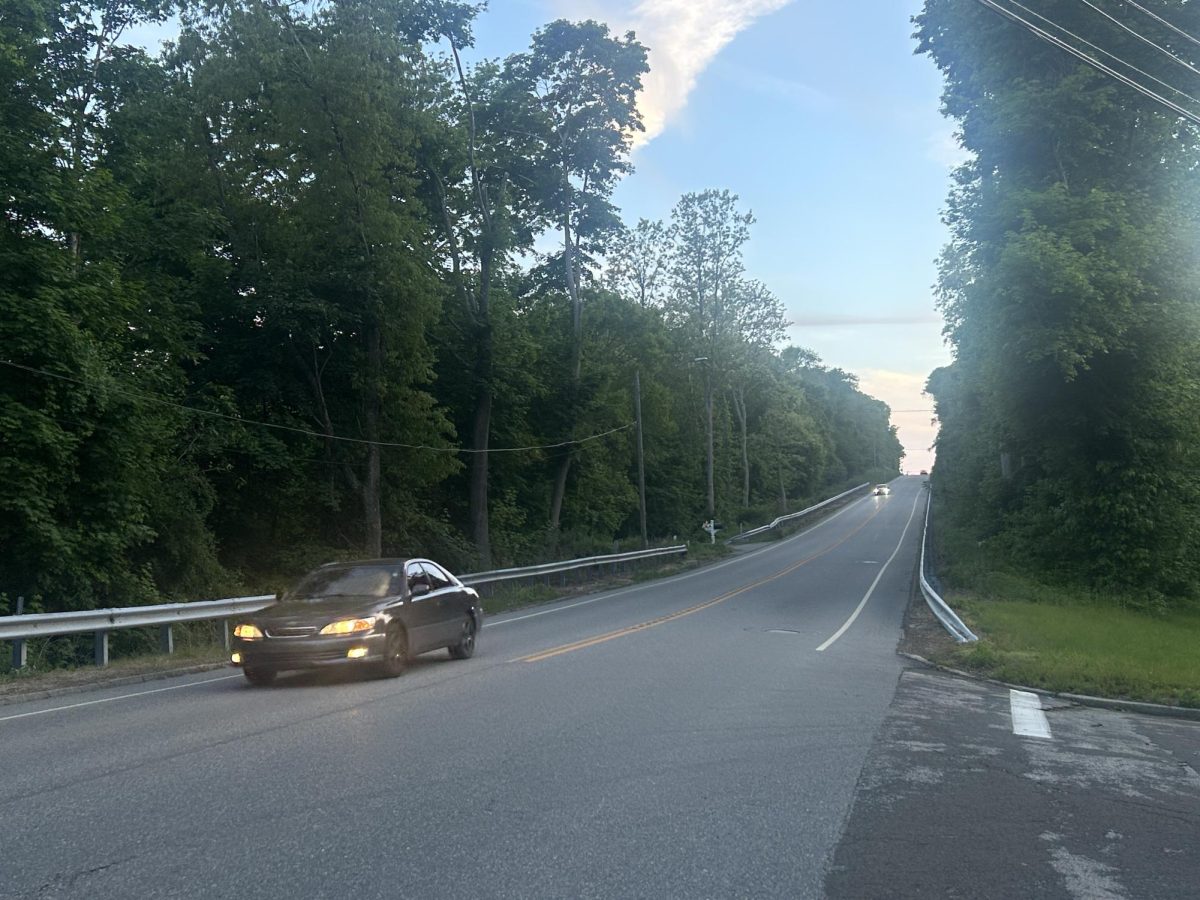
Concrete is the literal foundation of a community, yet a walk through many towns, like Waterford, reveal a system in serious disrepair. From neighborhoods missing walkways entirely, to cracked or worn sidewalks fractured by tree roots, pedestrian infrastructure is failing those who rely on it most.
While a cracked or missing sidewalk may not seem like an issue for people who have the privilege of simply walking along the grass or dirt on the side of the road, it can be a treacherous obstacle for a parent pushing a stroller, an elderly or disabled person, and a clumsy toddler. The lack of safe and accessible walkways becomes a greater issue for everyone on busy roads with speeding cars and drivers who don’t pay attention to someone walking on the thin dirt strip beside the road.
Sophomore Josephine Back says that she usually runs or walks around her neighborhood three times a week. She frequents the Oswegatchie area and runs alongside Niantic River Road. Most of the sidewalks in the area are either missing entirely or cracked down the middle. Back says, “I find this to be kind of inconvenient because I’ve tripped on them before and some areas don’t have sidewalks, so I feel like I’m gonna get hit by a car sometimes.”
Back’s fear of a car collision is not an irrational one. In 2021, approximately 7,388 pedestrians died and 60,577 were injured in traffic crashes in the United States. In 2023, 65% of those deaths occurred in locations without a sidewalk.
The disrepair of sidewalks is noticeable all throughout the town of Waterford. Sophomore Megan MacDougall says that she runs around the Harkness area frequently. Similar to Back, MacDougall also reports a lack of sidewalks along her paths.
MacDougall and Back are not the single unique example of walkers or runners in Waterford, rather they are two of the many people in the community who spend time outside on similar paths and face similar struggles.
Aware of the problems that community members will face as a result of the struggling pedestrian infrastructure, The town of Waterford made attempts in the past to improve the town’s walkways and safety. In 2017, an RSA, Road Safety Audit, was conducted to examine and enhance safety for pedestrians and bicyclists along Rope Ferry Road and Logger Hill Road. An RSA is a formal safety assessment of an existing road or walkway to improve performance and safety. Upon examination, it was reported that the area along Rope Ferry Road and Logger Hill Road has a lack of sidewalks, crosswalks, and wide shoulders for bicycle transport.
According to the Connecticut Department of Transportation, some of the medium-term goals of this project were to reconstruct existing sidewalks in the area to make them stand out from the roadway and comply with the Americans with Disabilities Act. This project also included some long-term goals to establish sidewalks and pedestrian paths along the Rope Ferry Road and Logger Hill Road area.
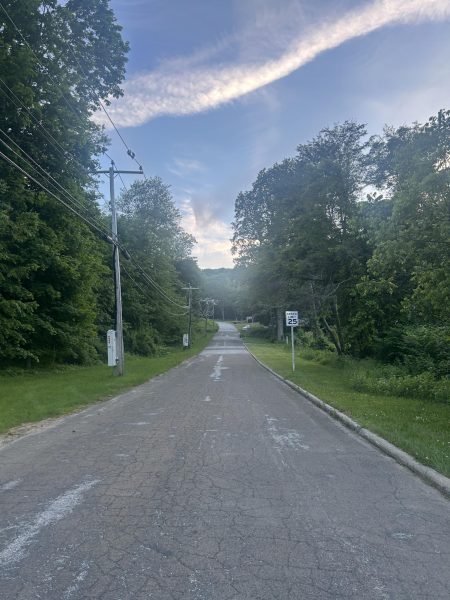
Despite the town’s medium and long-term goals to improve walkways, the area that the RSA was conducted in still struggles with safe and accessible walkways nine years later. The roads along the conducted RSA location are still missing sidewalks along certain stretches, such as the entire Logger Hill Road and a busy road with a steep incline and speeding cars.
To improve the safety, accessibility, and convenience of a community, the walkways of that community need to be updated and focused on pedestrians. While a wide roadway is important for traffic and transport, it is equally as important that beside the road there is a wide enough and maintained walkway. These improvements would not only contribute to the safety of all pedestrians, they would also promote walking, running, and spending time outside in the town. This would improve people’s emotional and physical health and the overall well being of the community.
As the days get longer and warmer, spending time outside should not be a safety concern, and it should not be a privilege only accessible by some.
