The booming of the bass, the captivating synths of a trance melody, and the collective heartbeat of thousands—this is the sensory gateway to a zone governed by four simple letters: PLUR.
While the outside world might see nothing more than neon lights and frantic dancing, those within the electronic dance music (EDM) community see PLUR as a social contract. Raves represent a modern ritualistic experience, promoting a strong communal unity, where PLUR is considered an ideology. PLUR is the epitome of rave culture. It isn’t just a slogan, it’s the rave scene’s global movement that finds its connection in the rhythm of music. With one-of-a-kind music, fashion, community, and culture, it’s hard to not be captivated by the welcoming and inclusive vibes of the experience.
To truly understand this culture, one must first break down the acronym that has held up PLUR culture since the warehouse rave days of the 1990s.
Peace: The commitment to a conflict-free environment has even bigger importance. We live in a world that’s divided by politics and prejudice, but the dance floor acts as a place where stress is left at the front door.
Love: Having an outward expression of empathy and care for everyone in the crowd, regardless of their background, identity, or orientation is required on the dance floor. Ravers take care of each other like family, they didn’t invite disrespect to the party.
Unity: Despite their differences, ravers are all part of a singular, vibrating whole. When the beat drops, hundreds of individuals become one interconnected soul. Through their love of music and dancing, it’s like everyone already knows each other!
Respect: An awareness of others’ boundaries, their right to self-expression, and the environment shared by the community is important. The safer the environment, the more fun everyone can have. It’s only fair to allow a good time for everyone, the community ensures the party is a home for everyone!
Music is the primary vehicle for PLUR, as sound bypasses the barriers we build. You don’t need to speak the same language as the person next to you to understand a minor-key progression or a high-energy rhythm, which is what makes this community so great.
Research in psychoacoustics says that synchronized movement to a steady beat releases endorphins and oxytocin, or the “bonding hormone.” This hormonal reaction creates a sense of “collective effervescence”—a term made by sociologists to describe the harmony felt during communal events. In the context of PLUR, the DJ isn’t just a performer; they are the conductor of a massive, shared emotional experience.
The fashion at raves is creative and allows for the purest form of self-expression. At raves and festivals, you can wear absolutely whatever you want. It is truly the ultimate personal fashion show. Some of the more common items to include in your rave attire are pashminas and Kandi. A pashmina is a silky-smooth scarf that music-goers often wear to raves. They are super versatile, often coming in a variety of patterns to go with every outfit.
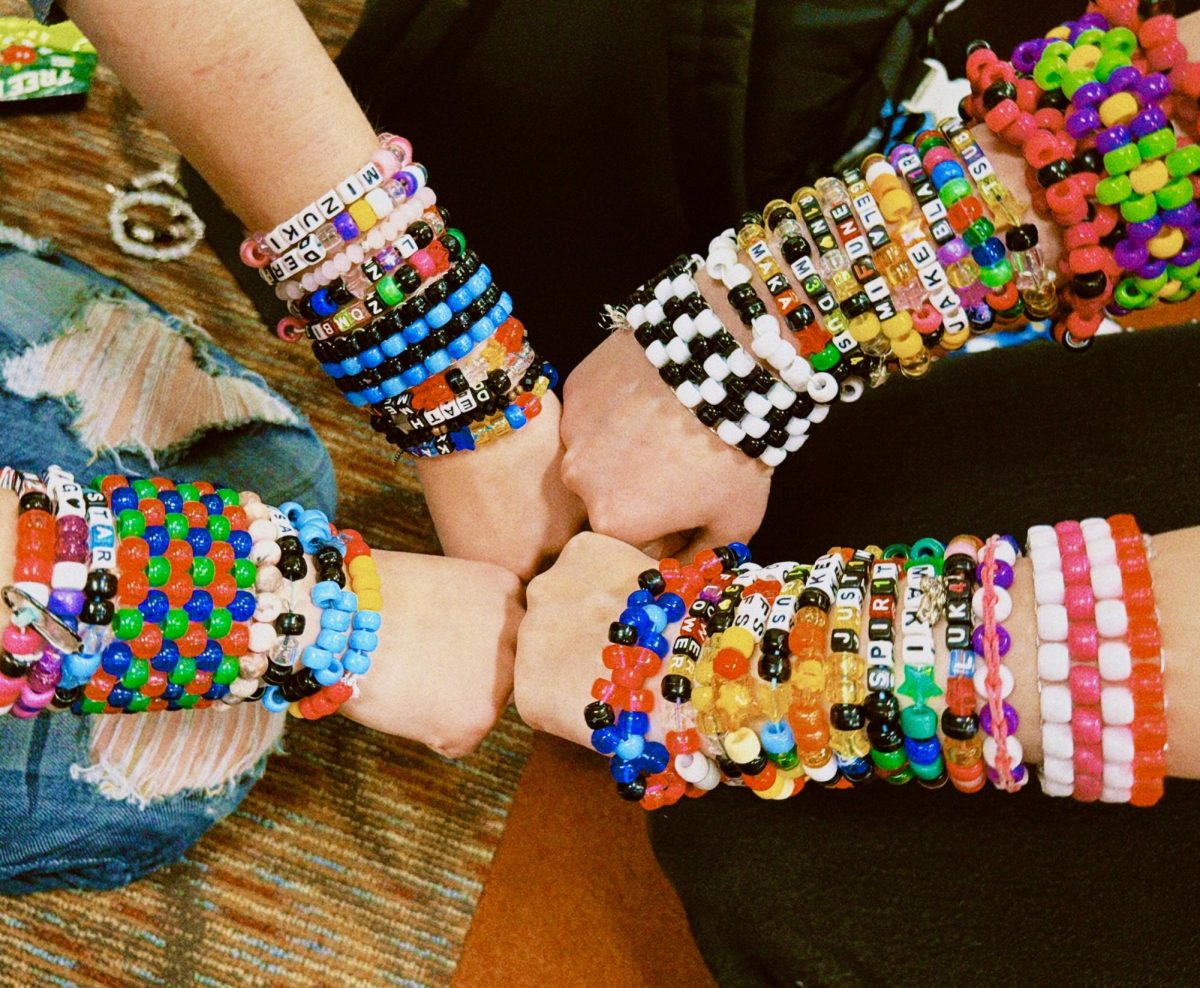
Another one of the most visible manifestations of PLUR culture is the exchange of Kandi; brightly colored, handmade beaded bracelets. This isn’t a simple hand-off; it is a ritualized exchange involving a specific sequence of hand signals: Two fingers making a V (Peace), forming half a heart with your hand against the other person’s (Love), interlocked hands (Unity), sliding a blanket or two from one hand to the other (Respect). The exchange of Kandi helps support the welcoming and friendly environment at raves because you often give Kandi to strangers.
If you’ve seen clips of massive festivals like Electric Daisy Carnival (EDC) or Tomorrowland, you already know the crazy vibe. But there’s a catch: most of those major events are strictly 18+ or 21+. While it can be frustrating to watch the livestream from your bedroom instead of being in the front row, being a teen in the PLUR community is actually a “pro-level” move. It’s about building the culture before you ever step foot on a festival ground. Since you can’t hit the clubs, many high schoolers start their journey by deep-diving into music production or following sets on Twitch and YouTube. Think of these years as the “pre-game.” By the time you turn 18 and head to your first massive event, you’ll already have a wrist full of Kandi, a library of music, and—most importantly—the mindset of someone who knows how to take care of the community. Despite this, some senior students at Waterford High School who have turned 18 enjoy hitting the club sometimes.
At its heart, the rave scene is held together by PLUR, it sets “unwritten rules” that remind everyone to be kind and look out for one another while they’re dancing. As one anonymous long-time member of the community explained: “It’s more than just a catchy acronym. To me, it’s a social contract. When you walk into a warehouse or a festival, you’re agreeing to leave the judgments of the outside world at the door. It’s the idea that for these eight hours, we’re going to look out for one another like family, even if we’re total strangers.” Without this mindset, the crowded room of strangers can turn into an unsafe space, which nobody wants.
While critics sometimes dismiss PLUR as idealistic or “rave-cliché,” its survival into the 2020s proves its strong resilience. In an era of rising digital isolation, the gathering around sound provides a sense of belonging. As festivals grow larger and more commercial, the core features of PLUR serve as a guiding light, reminding the community that the most important thing isn’t the stage production—it’s the testament to the power of frequency. It proves that when we tune into the same beat, we can’t help but find harmony in each other.