

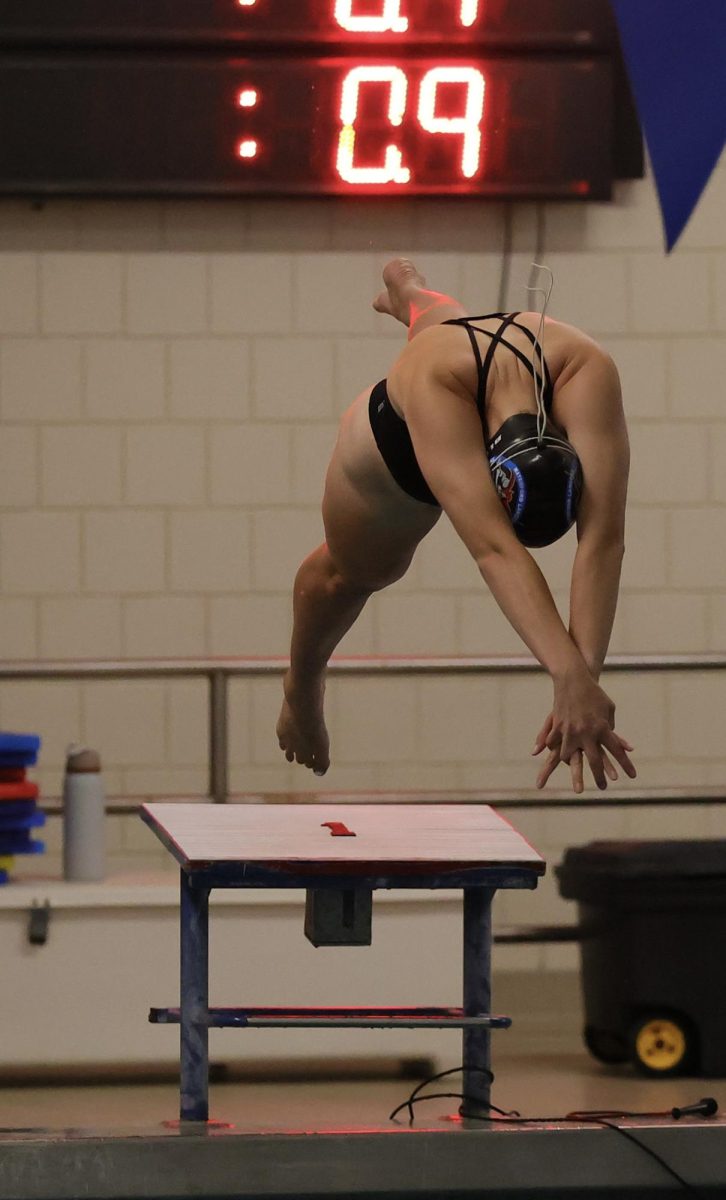
Blood is rushing, sweat begins to gather on the palms, and a concoction of fear, adrenaline, and excitement starts to build in the pit of the stomach. “Take your mark.” All muscles tense—not yet not yet—everything goes quiet, lock into your spot, and “BANG” the race is off. Track and swim, two sports so similar yet entirely different; the question is: which one’s harder?
As assistant swim coach, Brett Arnold, puts it, “I have done both running and swimming, and I think they’re both really hard.” Swim and track are each sport in their own right, requiring the discipline, commitment, and strength that comes with the title. However, not all of this is physical; there are mental aspects to these competitions as well.
Former track coach, Chris Gamble, mentioned how nerve racking, and in some senses, isolating racing can be. Gamble remarked on how “they are very similar; you’re participating for a team, but by yourself.” Racing is hard; no matter if it is swimming or running, in the end it’s just you out there with no one to rely on but yourself.
Despite how similar they may seem, swim and track have some major differences as well. Arnold describes how, “water is not your natural element so that increases the difficulty.” This adds another variable to consider and affects the variety and level of achievement according to body type. Track and Field coach, Elizabeth Force, mentioned how “some people are naturally born with long legs, large hands, large feet, or other physical advantages and it puts more people at a disadvantage in swimming.” But in contrast, she also states that “track has more area for variety in body type for athletes.” Furthermore, Gamble highlighted the final major difference being the availability of club teams for each sport. He pointed out that most successful swimmers compete on a club team in their off season, but run clubs are very infrequent or not present at all. This could put track athletes at a disadvantage for growth during the off season.
Based on a class poll 66.7% of students agree that, physically, swimming is the harder sport. Additionally, Gamble explains how “swimming is more challenging because water is harder to deal with; if you’re not a good runner you can still do it, but not with swimming.” Senior swim captain, Zaya Haglund, agrees, stating that “Swimming has less competition, but being good at running does not take as much training since it’s normal.” Whereas Force argues that although swimming may be harder in the cardiovascular sense, the long-term effects on your body are most definitely more intense with running. Overall, the consensus is that, in the physical sense, swim is harder than track due to the difficulty of water and its use of one’s entire body.
Moreover, multiple interviews and a student poll are in agreement that swim and track are equally as mentally rigorous. Connecting back to previous similarities, the isolating factor of racing sports can be frightening and nerve racking. Though you are contributing points for a whole team, the results of each event are left in the individual athlete’s hands. You are isolated within a lane and have to do the very best you can to get a personal best or win the race. Gamble explained this as he stated, “you don’t have anyone to blame but yourself if a race doesn’t go well or you make a mistake.”
Force and Gamble agreed that track is more enjoyable to watch than swim; but, at highly competitive levels, swimming can be enticing to watch. Force mentioned that “track is more fun to watch because you can see the whole runner and their struggle unlike swimming where they are hidden behind splashes.” Gamble agreed with this statement but also mentioned that “when any race is neck and neck, people get riled up and it’s fun to watch.” On the other hand, Zaya Haglund disagrees and thinks swimming is more fun to watch because “track is the same type of running just with different distances. In swimming we have different strokes and more variety than track.”
In all, both running and swimming are great hobbies to start and continue through life. Whether you’re looking for a sport less abrasive on joints or one that can help you complete bucket list items such as the NYC Marathon; running and swimming are both challenging sports that you should consider taking up or even cross training with. As two sports that are so similar yet so different, swimming and running both require physical and mental endurance from the athlete partaking in them. They are incredible outlets for many people and Waterford High School is lucky to have such amazing programs.

