

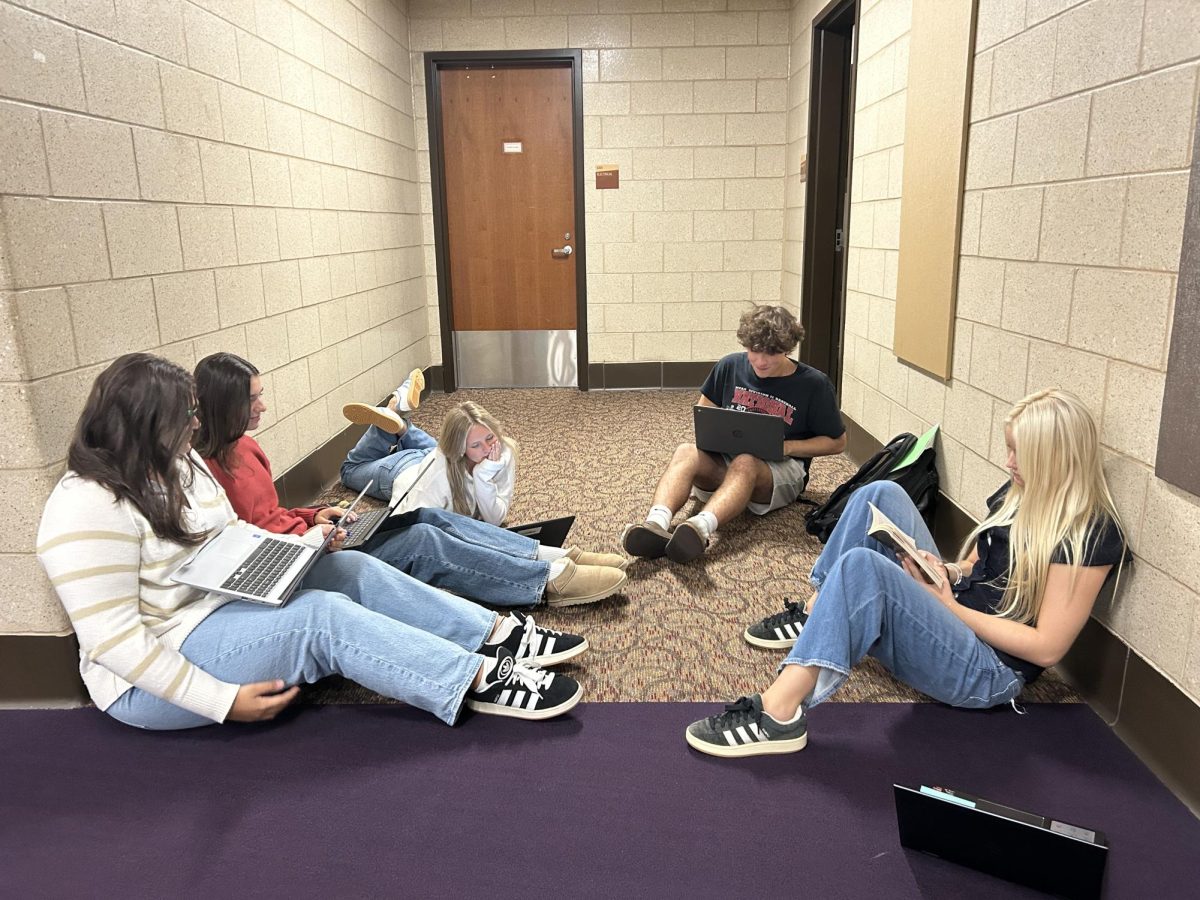
In recent decades, some school districts have lengthened school days, and others have experimented with start and end times to try to improve student learning.
Various schools have implemented later start times, arguing that teens need more sleep and struggle with arriving at school on time. A study hall in the morning can help some students start strong, but others find it unproductive due to poor early-morning focus.
Studies have shown that, especially in high school students, their ability to focus and get necessary assignments done early in the morning has a much lower success rate than students who have had to get those same assignments done later in the day. As they have had more time to process and wake up throughout the day, improving their productivity rates.
Nolan G. Pope’s study at the University of Chicago, “How the Time of Day Affects Productivity: Evidence from
School Schedules,” analyzed grades and test scores of nearly 2 million students in the Los Angeles Unified School District from 2003-2009. Students started around 8:00 a.m. and ended at 3:10 p.m.
The study found that math students scored higher in the first two periods, while English scores showed no significant difference across periods. This suggests the impact of timing depends on the subject.
Dr. Wesam Abuznada’s study, “The potential effect of technology and distractions on undergraduate students’ concentration,” noted that laptop and cell phone use in class had some negative effects on student learning, causing distraction.
As stated above, cell phones are most often a distraction in class when any type of work is needed to be completed so therefore, phones are not the most effective device to utilize in a study hall, although students can tend to have different opinions on the use of phones.
Sophomore Summer Discordia expressed that having her phone during her 3rd block study hall can be very distracting because she would rather go on her phone instead of doing her work, although it does depend on the day. Sometimes she’s more productive on certain days than others.
Sophomore Josie Back seems to have a different perspective on phones in study hall and finds them to help her productivity. She prefers having a study hall 4th block to compile
assignments from the day and believes music on her phone helps her concentrate by blocking out excess distractions around her.
On average, students would rather have their study halls during the fourth block of the day, ensuring that they are the most productive and willing to get their work done.
There are plentiful cons to the use of cell phones, but there are also various pros to counteract those cons.
A huge benefit of cell phone use is the ability to give students access to more educational resources that can’t always be reached when using a laptop. Along with that, cellphones also enable students to stay connected when they are not able to do so in person. For example, needing to communicate with a teacher or parent for personal reasons or school-related reasons when you are not able to do so in person. Cell phones can also be vital in emergency situations to report any emergency services or report a dangerous situation.
These pros of the use of cell phones in school are important reasons to have access to one’s device. That said, there are still crucial cons regarding the use of cell phones.
Despite the benefits, cell phones can be and can lead to major problems in school. The most vivid issue is distraction. It is easy for students to become off track when focused on their phones instead of paying attention in class. Growing numbers of students have been found to use their phones to cheat on tests or plagiarize work, which can result in harming their own learning and sometimes others.
Mr. Cadorette, the school librarian, has mixed feelings about cell phone use during study hall. On one hand, phones can help with homework or classwork by providing access to calculators or notes. On the other hand, he’s observed students zoning out while watching videos repeatedly. He also thinks limiting phone use can teach students the value of face-to-face conversations.
All of these factors combined make it challenging for schools to enforce a strict policy, especially in high schools. Taking all the pros and cons into account, public high schools still continue to struggle with keeping a concrete policy, which can be very difficult for students to adapt to, as the policies can change periodically.
